


How to Use Mind Mapping to Generate 50 Ideas in One Sitting
A timed, self-editing-free mind-mapping method that turns one starting word into fifty usable ideas in a single twenty-five minute sitting.

A blank page is easy to fill once you stop asking it for good ideas. That is the trick behind this method: one word in the middle of the paper, a timer, and a firm rule that nothing gets judged, crossed out or corrected until the clock runs down. Twenty-five minutes later you have a map with fifty branches on it. Some of it will be nonsense, but a handful will be genuinely useful — and you would not have reached them by staring at the ceiling.
Why the timer does the heavy lifting
With unlimited time, you start evaluating before you generate. A thought arrives, you weigh it, you decide it is not good enough, and the momentum dies. Generating and judging are different jobs, and doing both at once is why most brainstorm sessions stall in the first three minutes.
A timer separates them. For a fixed stretch, the only task is to add to the page. Nothing is deleted, nothing is corrected, nobody asks whether it is any good. Spelling can wait. Repetition can wait. The clock is in charge, and when it stops you switch roles and become the editor.
Set up in two minutes
- One sheet of A3, or A4 turned landscape. Bigger paper, looser thinking.
- A pen you enjoy using, plus a second colour for later.
- A timer you can see but which does not talk at you. A phone face up on silent is fine.
- Your starting word, written in the centre and circled.
- Any constraint in a corner: “for the shop window”, “for chapter three”, “must cost nothing”.
Paper usually beats a screen here. Typing invites tidying, and tidying is the enemy of volume. If you work on a tablet, use a canvas that lets you draw in any direction and turn the snapping off.
Pick a starting word you can picture
Vague prompts make vague maps. Start with “happiness” and you will fan out into platitudes within a minute. Start with “kettle” and you get steam, limescale, the whistle, the click when it switches off, and the particular quiet of a kitchen at six in the morning.
Good starters tend to be concrete nouns, a phrase you overheard, an object on your desk, or a question you are stuck on. Write it in the middle and ring it. If context helps, add four words in the corner — that narrows the search without shutting it down.
The twenty-five minute run
Round one, five minutes: first branches
Aim for eight to twelve lines leaving the centre, one or two words each. Put down whatever arrives: a place, a verb, a texture, a sound, the opposite of the word, a person, a question. Do not make them sensible. From “kettle” you might get whistle, copper, grandmother, camping, broken switch.
Round two, ten minutes: second generation
Now work outwards. Every branch needs at least two children. Ask: what does this remind me of? What does it look like? What goes wrong with it? Who would care? What came before it? For “whistle” you might add referee, boiling train, dog, pitch, tune. This round does the heavy lifting — eight branches become thirty.
Round three, five minutes: collisions
Draw lines between branches on opposite sides of the page and force two unrelated nodes together. Kettle plus letter: a note that arrives by steam. Copper plus six a.m.: an alarm you have to heat up. Most pairings will be silly. Two or three will be the best things on the page, and that is a good rate.
Final five minutes: harvest
Count your nodes and number them if that helps. Fifty is the target; forty varied ones is fine. Keep the pen moving right to the end. The last two minutes, when you are certain you have run dry, are often where the genuinely odd ideas live.
Keep the editor out of the room
The urge to fix things mid-flow is strong, especially if you write or design for a living. Notice it, name it, ignore it. Speed keeps you in the associative part of your thinking, where material is loose and plentiful. Accuracy is tomorrow’s problem.
- No crossing out.
- No spelling corrections.
- No neat redrawing.
- No “that will never work”.
- No stopping to check a fact.
- If a voice says “this is stupid”, write stupid as a branch and carry on.
From fifty nodes to fifty usable ideas
Only now do you edit. Read the map through once without a pen, then go round again in your second colour and mark each node: strong, possible, or filler. Then group the strong ones. Circle clusters that belong together and name each cluster. Six nodes about morning routines might be one idea with five supporting details rather than six separate ones.
Put anything you starred through three questions:
- Does it fit the constraint in the corner?
- Could I make a rough version of it this week?
- Would I notice it if I walked past it?
Anything that passes all three goes on the shortlist. Work from the shortlist, not the whole map. The map is a quarry, not a wall.
Watch for the four traps
The most common is padding with synonyms: kettle, pot, jug, teapot, cauldron. Five nodes, one idea. Push for different kinds of connection instead — function, feeling, material, history, failure. The second trap is branching in one direction only. If your map looks like a fan leaning left, deliberately head the other way. The third is stopping at the first layer: the first five branches are the ones anyone would write, and your thinking starts around branch six. The last is tidying. A messy map with sixty nodes beats a beautiful one with twelve, every time.
Try it tonight
Pick a word now, before you close this page — anything you can picture. Set a timer for twenty-five minutes, take a sheet of paper, and fill it. Do not stop to judge. When the timer goes, put the map in a drawer and leave it for a day. Come back, mark the strong nodes, group them, and choose three to take further. Keep every map you make, dated, in one folder. After a month you will have a few hundred nodes to raid whenever a project needs a starting point.
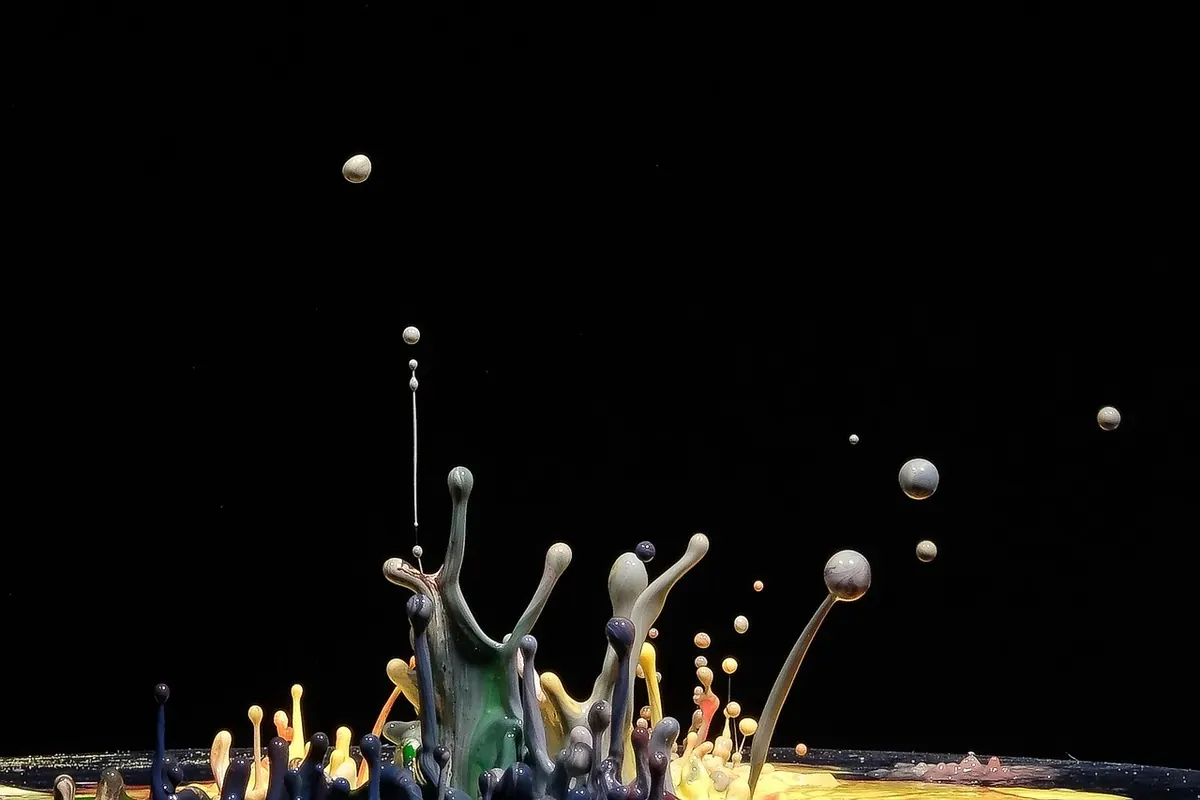
Photo: DariuszSankowski / Pixabay